
 Sailing holidays
  Skippered
  Flotilla sailing
  Digital Flotilla
  Cabin charter
  Request offer
Picture the sailing vacation you’ve always wanted—gliding along stunning coastlines, swimming in crystal-clear water, snorkeling with tropical fish, and discovering hidden coves you didn’t even know existed. And then, just when everything is perfect, it hits: seasickness. Suddenly, the fun is over.
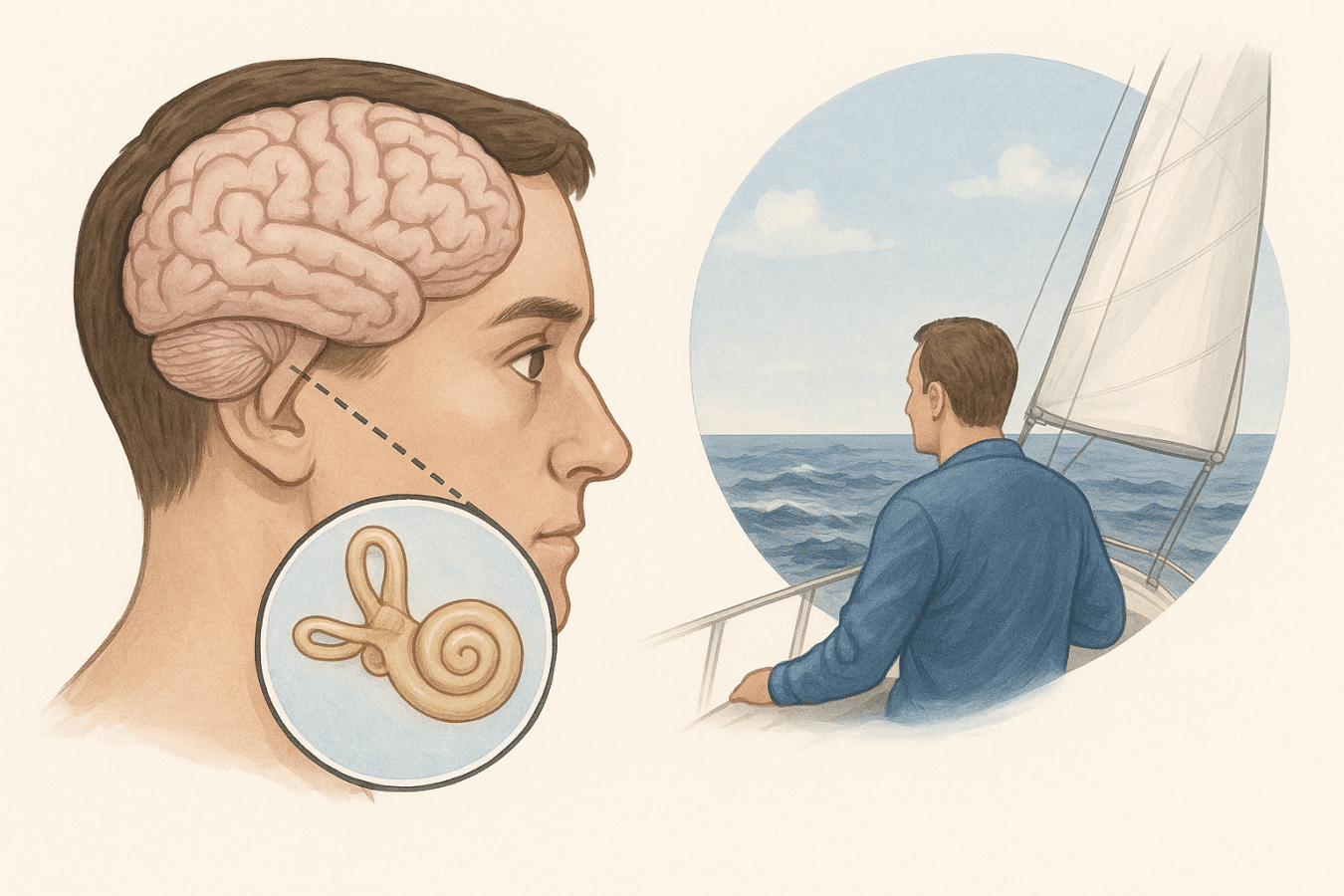
Quick science note: motion sickness and seasickness have been described since the 1800s. They happen when your inner ear senses motion that your eyes don’t see—conflicting signals that confuse the brain. Odd, right?
Learning how to prevent motion sickness/seasickness can turn your time at sea from “miserable” to “unforgettable.” Nobody wants to feel ill on vacation—especially at sea. While seasickness is surprisingly common (especially on a first trip), there are plenty of effective ways to prevent and manage it.
In this guide, we share 10 practical tips to avoid seasickness on a boat—and what to do quickly if it hits—so you can get back to enjoying the journey.

Understand how seasickness prevention works
Before we dive into solutions, it helps to understand what’s going on. Seasickness is your body’s response to conflicting signals from your eyes, inner ear, and body. When those signals don’t match, your brain gets “confused,” and the classic symptoms start. Nausea is usually the main one, often along with dizziness, cold sweats, and general discomfort. The key to avoiding seasickness while sailing? Tackle this sensory mismatch using proven methods.

The inner ear and motion sickness—explained
Motion sickness/seasickness often comes from a mismatch between what your eyes see, what your inner ear “feels,” and what your body senses. The inner ear—responsible for balance—detects movement and sends signals to your brain. If that doesn’t match your visual input (e.g., when you’re below deck and can’t see the waves), the brain “throws in the towel” and symptoms begin.
To counter this, fix your gaze on a stable point in the distance—ideally the horizon. That helps your brain reconcile inner-ear motion with what your eyes see and restores balance. Fresh air and regular breaks on deck also work wonders.
10 effective ways to avoid seasickness on a sailing vacation
1. Take the helm
If you get queasy at sea, you likely feel car-sick too. Ever notice you’re rarely sick when you’re the one driving? That’s no coincidence.
On the water, the same principle helps: when nausea creeps in, take the helm and focus on the horizon—head and eyes forward, in the direction of travel. It might be the last thing you feel like doing, but plenty of sailors swear by it.
In the moment, it’s often your best shot at avoiding seasickness.

2. Ginger—the natural helper
Ginger calms the stomach—and works surprisingly well against seasickness during passages.
Plenty of options: ice-cold ginger ale, ginger chews, ginger cookies, or water/tea with fresh ginger. Even if you think you won’t get sick, it’s smart to keep ginger on board—just in case.
Trust us: ginger can be a real “life ring” when nausea hits.

3. Less self-criticism—more self-affirmation
It sounds simple, but positive self-talk really can help.
When queasiness sets in on board, try this:
Name the problem: Seasickness
Possible cause: Fear or loss of control
New thought: “We’re safe, nothing is happening, and we’re okay with this situation.”
The goal is to “reprogram” your mind—and for many people, it works.

4. Hypnosis
Despite the stigma, hypnosis can help with seasickness, general motion sickness, and even dizziness at sea.
One popular option is Giovanni Lordi’s Mind Journeys audio series. A quick search will give you details.
If hypnosis has helped you before, it’s worth trying for seasickness as well.

5. Sea-Bands & acupressure
Feeling sick while sailing? There’s a simple acupressure point that can help.
Place three fingers from the base of your wrist up your forearm and press just below the center point of the forearm. It often helps, though usually temporarily.
Another option is Sea-Bands—wristbands with a small stud that applies constant pressure to that spot. Many sailors use them to prevent motion/seasickness, and reviews are positive.
6. Nevastic Audio app
Yep, there’s an app for motion sickness—and it can work.
Clinically tested, Nevastic Audio helps with nausea and vomiting associated with motion/seasickness. Each session is 27 minutes long, a sequence of sounds/songs listened to on headphones to create a balancing effect.
It’s especially useful for kids. If you plan to sail with children , it’s worth a look.
7. Nelson’s Travella
This homeopathic remedy combines Staphisagria, Apomorph, Cocculus, Petroleum, Theridion, Nux vomica, and Tabacum for motion sickness.
Often available over the counter at pharmacies or online. A good item to have before you cast off.
8. Relief Band Explorer
Similar to Sea-Bands, but a step further: it sends mild electrical pulses to the pressure point.
On first use, you may feel tingling in your palm or middle finger—totally normal. There are five intensity levels.
At around €80 (or comparable in USD), it’s an investment—but worth considering if nothing else works.
9. Scopoderm TTS/scopolamine patches
A common issue: when nausea/vomiting is severe, swallowing pills is hard. Doctors often recommend Scopoderm TTS or scopolamine patches.
When nausea starts, apply a patch and wait for your stomach to settle.
No guarantees—but many sailors find them effective. They’re often part of motion-sickness protocols.
10. Cinnarizine/Stugeron
Unlike patches, this is a traditional swallowable tablet.
It effectively prevents vomiting and dehydration. Heads up: it can make you drowsy. But honestly—better a bit drowsy than spending the trip over the rail.
Food on board: what to eat (and avoid)
What you eat before and during your sail strongly affects how you feel. Don’t head out on an empty stomach—it increases your risk of seasickness. Choose lighter, easy-to-digest meals and snacks. Heavy, fatty, or very spicy foods irritate the stomach and worsen symptoms—avoid them.
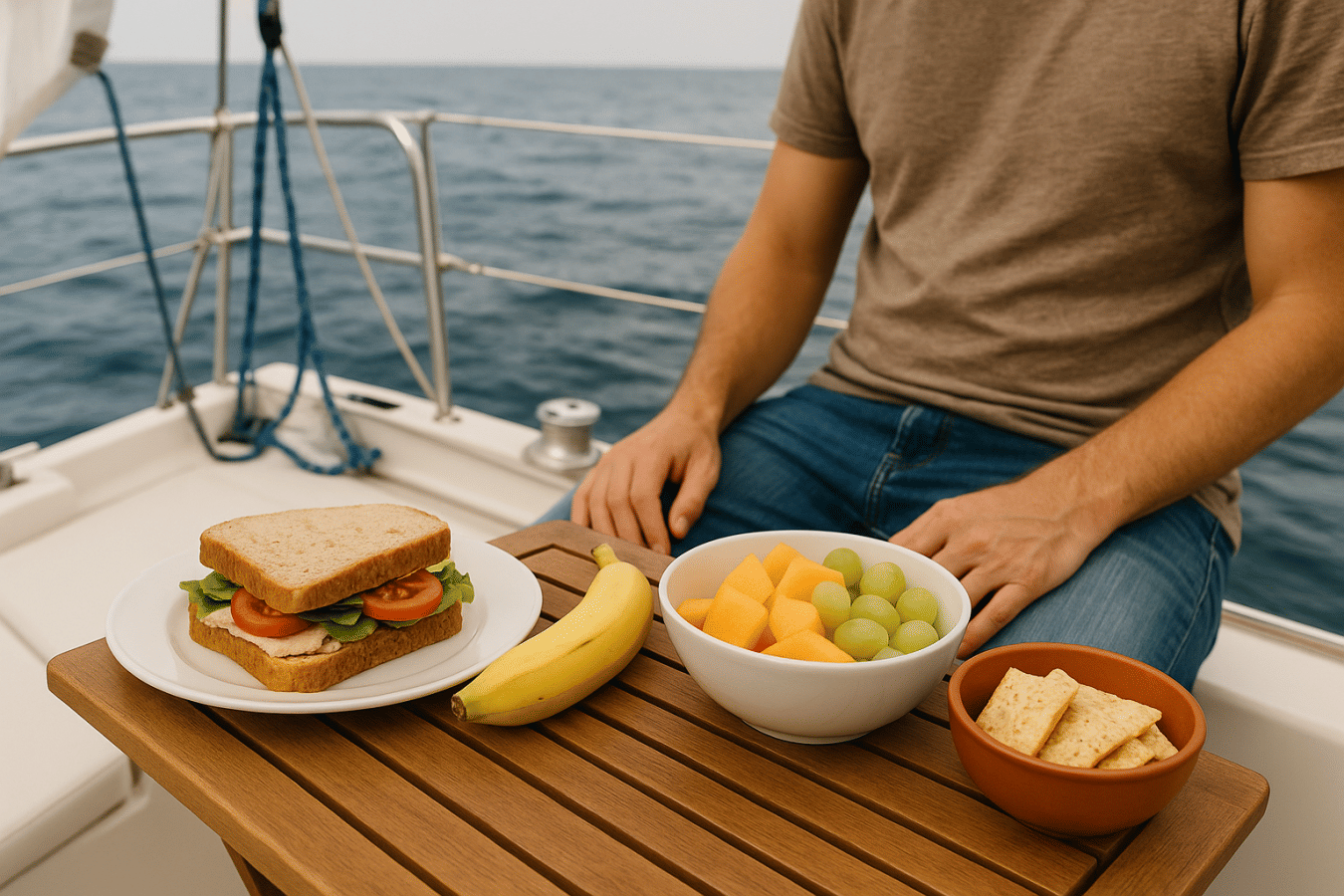
Stay hydrated—dehydration makes everything worse and raises your seasickness risk. Drink water regularly, and be cautious with coffee and alcohol, which dehydrate you. Smoking can also worsen symptoms—best to avoid it on board.

Kids and seasickness: special considerations
Kids are often more sensitive to motion sickness—in cars and on boats—so a few extra steps help them enjoy the trip. One of the most effective: keep them engaged and distracted—games, music, or songs so they focus less on the movement. Spend plenty of time on deck, in fresh air, looking at the horizon so eyes and inner ears “sync up.”
If your child shows early signs of mild nausea or dizziness, ask your pediatrician about suitable medication. Always follow dosing and instructions carefully.
With preparation, on-deck breaks, and enough drinks and activities, families can prevent seasickness and make sure everyone has a great time on the water.

“Cybersickness”: what sailors should know
With the rise of virtual reality and video games, a new challenge has emerged: “cybersickness” (virtual motion sickness). The cause is the same: a conflict between what your eyes see and what your inner ear registers. When your eyes perceive movement in a virtual world but your body/inner ear doesn’t register real motion, you may feel nausea, dizziness, and cold sweats—and sometimes vomit.

To counter it: take screen breaks, focus on a distant fixed point, and adjust your gaze/posture to help your brain recalibrate. If symptoms hit, step away from the screen and get fresh air. Talk to a healthcare professional about prevention and treatment.
Understanding the causes and symptoms prepares you to prevent discomfort and focus on enjoying your sail—wherever the wind takes you.
What are the symptoms of seasickness?
Spotting them early helps you act before things get worse. Typical symptoms include:
- Nausea and vomiting
- Dizziness
- Low energy/apathetic mood
- Excessive sweating
- Cold sweats
- Headache
- Paleness
- Drowsiness
- Blood pressure fluctuations
These symptoms can significantly affect daily life and make travel and activities harder.
Keep your spirits up at sea!
Now you know how to avoid seasickness with these 10 proven methods. Stay positive—it passes!
Best advice? Try different approaches and find what works for you. Many experienced sailors combine several—e.g., ginger, focusing on the horizon, and acupressure wristbands.
And once you’re feeling better? Good food tastes even better. Check out our tips for cooking on board and enjoy your sailing vacation even more!