
 Sailing holidays
  Skippered
  Flotilla sailing
  Digital Flotilla
  Cabin charter
  Get a quote
Everything You Need to Know About Planning an Eco Friendly Sailing Holiday
Exploring a destination by boat feels different from any other kind of travel. You wake up surrounded by water instead of traffic and start your day with a swim before the world is fully awake. You move from bay to bay with the wind in your sails and the horizon ahead of you. This is slow travel at its best. Sailing holidays let you spend more meaningful time in remote locations, fostering deeper connections with the places you visit and supporting local communities.
Sailing already brings you closer to nature than most holidays ever could. It is quieter, slower, and more connected to the elements. Choosing an eco friendly sailing holiday is an immersive and responsible way to explore the world while minimizing your environmental impact. Still, being at sea does not automatically make a trip sustainable. The small choices you make before you leave and while you are on board have a real impact.
Introduction to Sustainable Sailing
Sustainable sailing is a mindful way to explore the world’s oceans while treading lightly on the environment. As sailing holidays become increasingly popular, adopting these practices is essential to ensure that adventures don’t come at the expense of the marine environment. By making conscious choices, you can reduce waste, protect marine life, and help preserve the stunning coastlines and islands you visit.
Whether you’re a seasoned sailor or new to the water, embracing sustainable practices allows you to enjoy your adventure with the knowledge that you’re making a positive impact.
Why Sustainable Sailing Matters
Our oceans are essential to life on Earth. They regulate the climate, absorb carbon dioxide, and support countless ecosystems. At the same time, they face increasing pressure from pollution, overfishing, and rising temperatures.
As sailors, we are privileged to experience the ocean up close. That connection naturally comes with responsibility. The good news is that small adjustments can make a meaningful difference without compromising your holiday experience. Sharing knowledge about eco-friendly practices and encouraging fellow sailors to adopt sustainable behaviors can amplify our positive impact.
Planning Your Sailing Holiday
Start by considering destinations renowned for their natural beauty and commitment to sustainability, such as the British Virgin Islands, the Ionian Sea, or the coastlines of Greece.
When selecting a sailing operator, look for those who prioritize responsible waste disposal and energy efficiency. Opt for boats equipped with solar panels and reusable containers. Packing lightly and avoiding single use plastics will help you generate less waste. Support local economies by shopping at markets and dining at family run restaurants.
1. Minimise Your Carbon Footprint
Let the Wind Lead the Way
One of the biggest advantages of a sailing holiday is that you can rely on wind power. Choosing a sailboat instead of a large motor yacht reduces fuel consumption considerably. Whenever conditions allow, sail instead of motor. This not only lowers emissions but also enhances the experience, bringing a sense of calm that engines cannot match.
Use Fuel Efficiently
There will be moments when using the engine is necessary, such as when entering a marina or during calm weather. To reduce consumption:
- Maintain a steady cruising speed
- Avoid rapid acceleration
- Distribute weight evenly onboard
- Plan your route efficiently
- Keep the hull clean to reduce drag
Consider Solar Assisted Boats
Many modern yachts are equipped with solar panels that power onboard systems such as lighting, refrigeration, and navigation equipment. Choosing a boat with renewable energy systems reduces your reliance on fossil fuels and allows for quieter anchoring experiences.
Offset Where Possible
If your journey includes flights or unavoidable fuel usage, consider supporting certified carbon offset initiatives.
2. Avoid Pollution and Reduce Waste
Refuel Responsibly
Fuel spills are harmful to marine ecosystems. When refuelling, take your time and avoid overfilling tanks. Even a small spill can spread quickly across the water’s surface.
Reduce Single Use Plastics
Plastic pollution is one of the greatest threats to our oceans. Consider bringing:
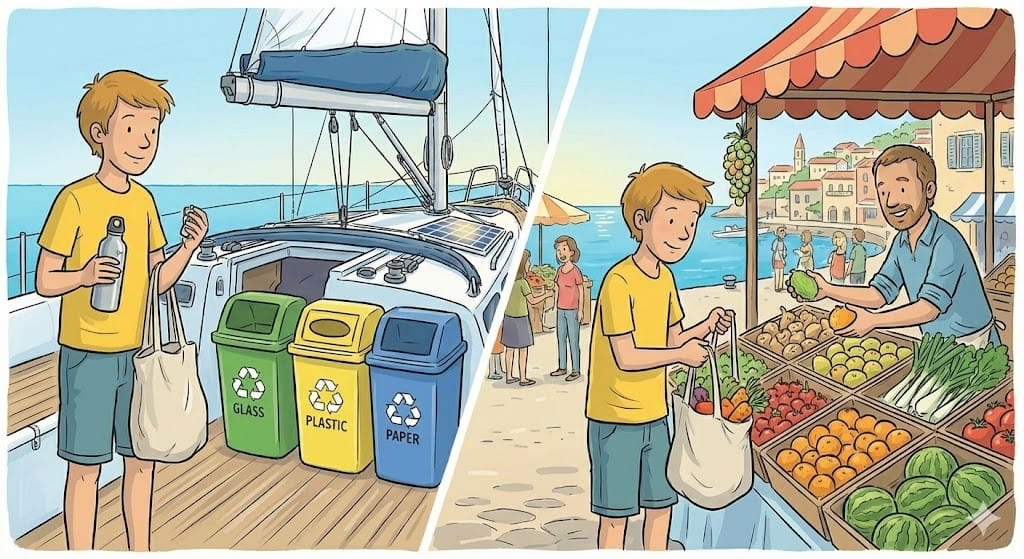
- Refillable water bottles
- Reusable shopping bags
- Glass or stainless steel food containers
- Cloth napkins
Recycle and Dispose of Waste Properly
Check local guidelines and separate waste accordingly. Most marinas provide recycling facilities. Never throw anything overboard, including food scraps. Even biodegradable waste can disturb marine ecosystems.
Manage Black Water Responsibly
Untreated sewage discharge is restricted in many coastal areas. Always follow local regulations and use pump out stations when available.
3. Protect Marine Wildlife
Keep a Safe Distance
When wildlife approaches your boat, enjoy the experience without interfering. Avoid chasing animals or getting too close for photographs. Reduce speed and allow them to move naturally.

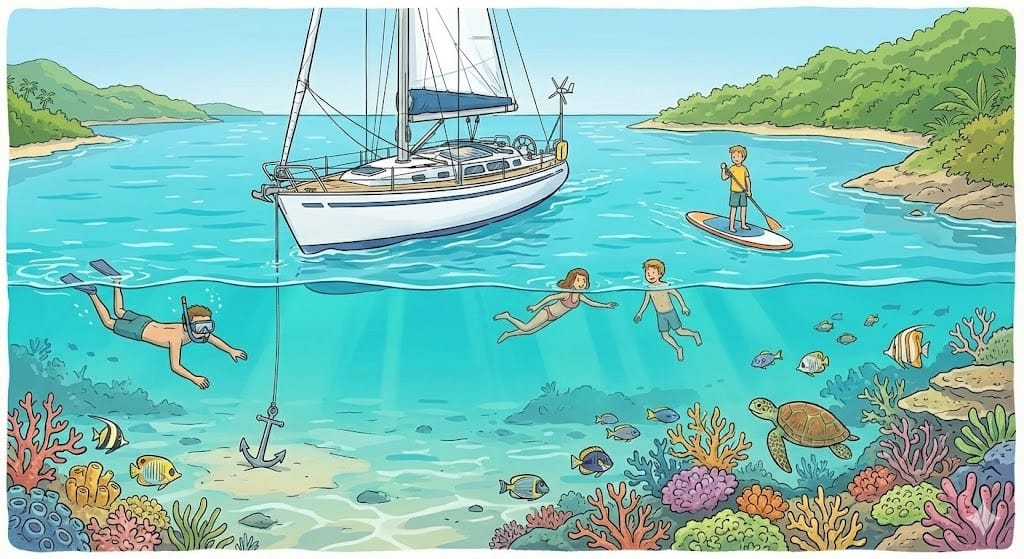
Anchor with Care
Anchoring incorrectly can damage fragile underwater habitats such as coral reefs and seagrass meadows. Whenever possible:
- Use designated mooring buoys
- Anchor in sandy areas
- Consult nautical charts and local advice
Practice Sustainable Fishing
If fishing is part of your holiday, follow local regulations, avoid protected species, and release undersized catches.
Reduce Noise Pollution
Marine animals rely on sound for navigation and communication. Whenever possible, slow down and embrace the quiet side of sailing.
4. Make Conscious Food Choices
Buy Local and Seasonal
Shopping at local markets reduces transportation emissions and supports coastal communities. Seasonal produce is often fresher and grown with fewer resources.
Choose Sustainable Seafood
Research which species are sustainably managed in your destination and make informed choices when dining ashore or cooking onboard.
Minimise Food Waste and Packaging
Plan meals carefully to avoid over purchasing. Loose fruits and vegetables are a better option than heavily packaged products.
5. Maintain Your Boat Properly
- Inspect Engine and Fuel Systems: Regular inspections prevent leaks.
- Keep the Bilge Clean: Routine cleaning prevents accidental oil discharge into the sea.
- Stay Ahead of Repairs: Preventative maintenance extends equipment lifespan and reduces waste.
- Keep the Hull Clean: A clean hull reduces drag, which improves fuel efficiency.
Life On Board
Use eco-friendly toiletries and sunscreens that are safe for marine life and coral reefs. Be mindful of your water and energy use to conserve precious resources. Many sustainable sailing holidays also offer opportunities to participate in beach cleanups or local conservation projects.
Choosing the Right Charter Company
When booking your yacht:
- Ask whether the boat has solar panels
- Inquire about hybrid options
- Check if recycling guidance is provided
- Choose operators committed to responsible practices
A Final Thought on Eco Friendly Sailing
Sailing and sustainability naturally complement each other. Wind power, slower travel, and close interaction with nature create an ideal foundation for responsible tourism. Eco friendly sailing is not about restrictions; it is about awareness. Small actions collectively make a meaningful impact.
By sailing consciously, you ensure that the bays, beaches, and marine life you enjoy today remain just as beautiful for future generations. The ocean is not only our destination; it is our shared responsibility.