
 Sailing holidays
  Skippered
  Flotilla sailing
  Digital Flotilla
  Cabin charter
  Get a quote
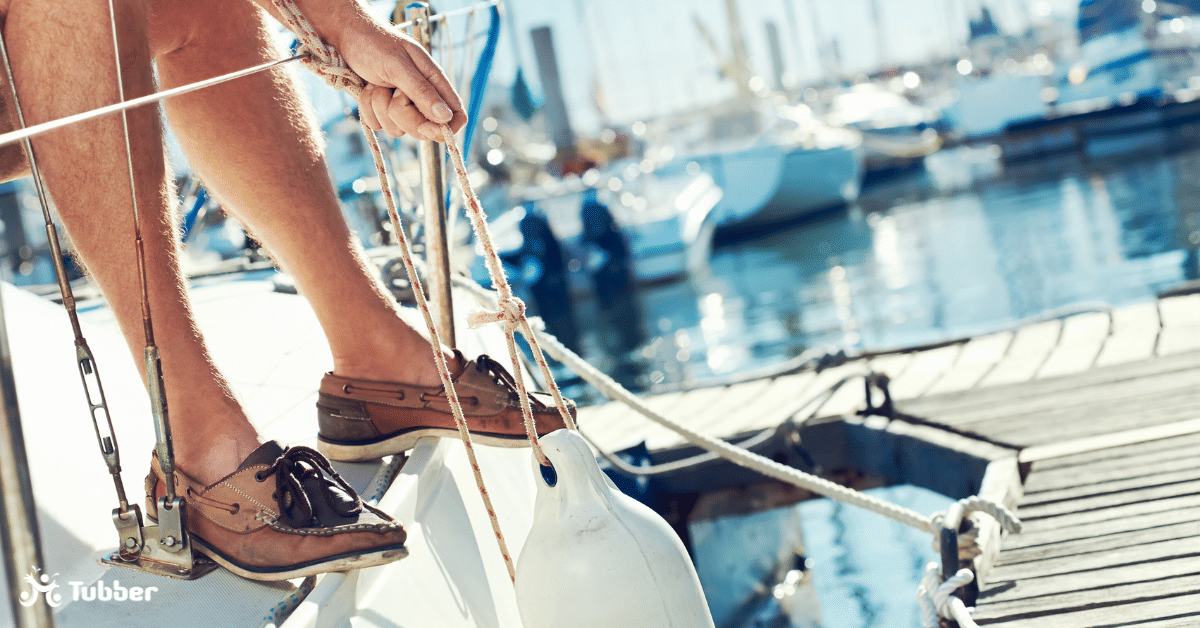
Mooring is an essential skill for any sailor and ensures that your yacht stays safe while you enjoy your destination.
Mastering different mooring techniques not only increases safety but also enables you to explore a wider range of locations - from busy marinas with plenty of dock space to secluded bays near crowded anchorages.
Understanding factors such as the marine environment and boat lengths can further refine your approach.
In this guide, we'll cover key mooring methods, best practices and common mistakes to avoid, plus how Tubber's Digital Flotilla can help make mooring easier, especially when navigating unfamiliar waters and dealing with strong winds or large vessels.
Types of Mooring and Best Practices
Med Mooring (Mooring in the Mediterranean)
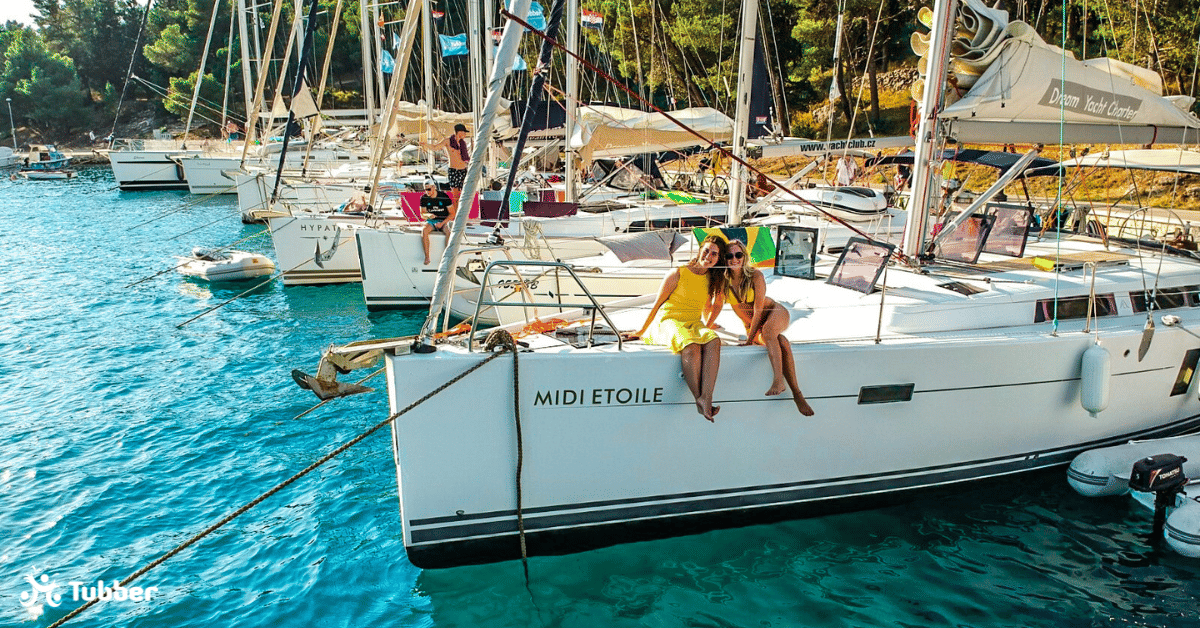
- Technique: A common technique in Mediterranean marinas, med-mooring, involves backing into a berth and attaching the stern to the dock while anchoring or tying the bow to a mooring line.

- Best practice: Approach slowly, align the stern with the dock and drop the anchor or attach the mooring line when you are close to the dock before backing up. Secure the stern reins first, then adjust the bow.
- Pro tip: Use fenders to prevent hull damage and make sure there is enough space between your boat, neighbouring boats and even larger vessels that may manoeuvre nearby.
Anchoring
- Technique: Anchoring is essential for overnight stays in bays, especially in areas with tight anchorages.
- Best practice: Choose a spot with good footing (sand or mud is ideal), drop the anchor slowly and let out enough chain - usually four times the water depth. Consider the type of anchor you are using, as different designs work better in different conditions. Back up carefully to deploy the anchor and check that it holds.
- Pro tip: Use a GPS anchor alarm to warn you if your boat is drifting, especially in environments where strong winds or currents are common.
Mooring Buoys
- Technique: Mooring buoys are a safe and environmentally friendly alternative to anchoring.
- Best practice: Approach slowly into the wind or current, hook the buoy's haul line with a boat hook and attach it to the bow cleat. Use a cleat to distribute the tension, and always check that the buoy is sized for the length of your boat.
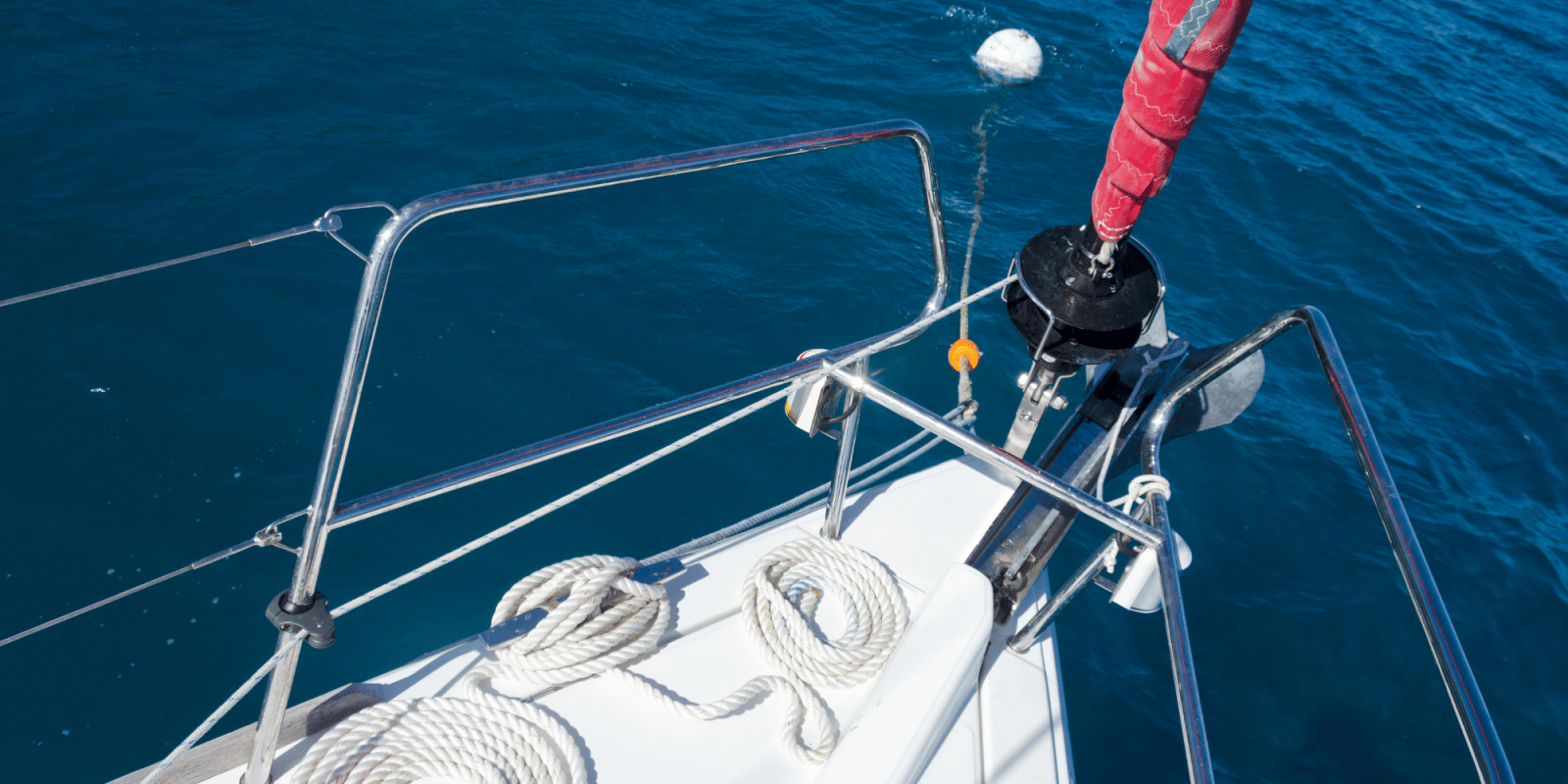
- Pro tip: Choose buoys designed for vessels of your size and inspect the condition of the buoy before attaching it to make sure it can withstand unexpected conditions such as strong winds.
Mooring in a Dock
- Technique: Dock mooring involves mooring your boat directly to a jetty or pier, usually using cleats or bollards.
- Best practice: Use spring lines to prevent the boat from moving forwards and backwards, and adjust the lines according to tidal changes. Cross the stern lines for added stability and make sure the chosen dock space is adequate for the size of the boat.
- Pro Tip: Keep lines tight but not too tight to allow for natural movement, especially in running mooring situations where flexibility is key.
Anchoring with Lines to Shore
- Technique: This method involves anchoring in a bay and securing the stern with long stern lines or shore lines to rocks or fixed points on land, preventing excessive movement in confined spaces.
- Best practice: Drop the anchor in a good spot, then bring the stern lines to shore using a dinghy or by swimming over them. Attach them to stable rocks or fixed points to ensure a balanced tension.
- Pro tip: Use floating lines if possible to prevent them from getting caught on underwater obstacles, and leave some slack to account for tidal changes. Also, don't use trees or branches as fixed points on land, as they are less reliable in holding your boat.
Common Mooring Mistakes and How to Avoid Them
- Approaching too quickly: Always approach slowly and maintain control, especially in tight anchorages or near large vessels.
- Misjudging wind and current: Take wind and current into account when aligning your boat. Adjust your approach according to the conditions, especially in areas with strong winds.
- Inadequate anchor reach: Make sure you use enough chain or anchor chain; insufficient reach reduces holding power and increases the risk of dragging.
- Poor communication: Clear communication between crew is crucial during mooring. Assign specific roles and use clear hand signals if noise is an issue.
- Ignoring local guidelines: Follow marine and local regulations on permanent moorings and other local procedures to avoid fines and ensure safety.
- Anchoring on unsuitable ground: Avoid anchoring over large underwater rocks or dense seagrass, as the anchor may get stuck or not hold. Instead, look for sandy or muddy bottoms for better grip and easier retrieval.
How Tubber’s Digital Flotilla Can Help You
Mooring can be one of the most challenging aspects of sailing, especially in unfamiliar places. This is where Tubber's Digital Flotilla service becomes invaluable. With remote guidance from an experienced digital skipper, you can get real-time advice tailored to your location and conditions.
- Route planning: Get daily sailing routes that include recommended mooring locations, taking into account local conditions, regulations, and even factors like boat lengths and available docking space.
- Help with mooring: Not sure about co-mooring or anchoring in a particular bay? Your digital skipper will provide step-by-step guidance and advice on everything from choosing the right type of anchor to handling anchor chains.
- On-demand support: Do you encounter unexpected challenges? Send a message or call your digital skipper for immediate help - whether it's advice on tying stern lines in running mooring conditions or finding an alternative anchorage in areas with many boats.
Conclusion
Mastering mooring techniques is essential for a safe and enjoyable sailing experience. Understanding different mooring methods and avoiding common mistakes - such as misjudging boat lengths or underestimating the effect of strong winds - will give you the confidence to explore even the most remote locations.
And with Tubber's Digital Flotilla service offering expert guidance and real-time support, mooring in unfamiliar waters, whether close to permanent moorings or among large vessels, is stress-free and uncomplicated.
Book your digital flotilla experience today and discover the perfect blend of independence and professional support.